
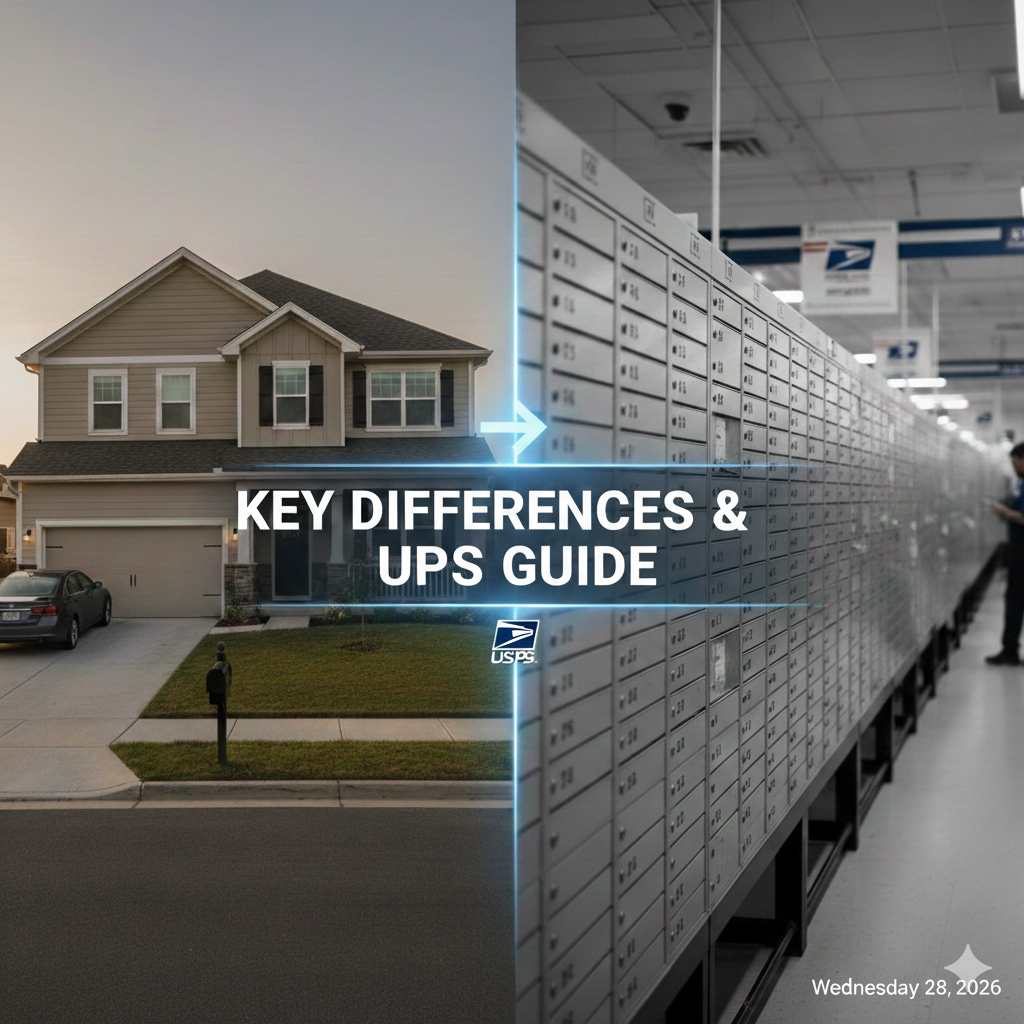
Knowing the residential address meaning, how it differs from a physical vs mailing address, and how the USPS legal address system classifies addresses is essential for avoiding missed deliveries, privacy risks, and legal complications. With more people working remotely, running home-based businesses, and traveling frequently, using the correct address ensures your mail and packages always reach you safely and efficiently.
What Is a Residential Address?
A residential address is the physical location where you live and carry out your daily life. It represents your primary home, the place where you sleep, store your belongings, and return after work, school, or travel. Residential addresses are more than just locations; they are closely tied to your legal identity, official records, and access to essential services.
Your residential address is used for a wide range of purposes, such as:
Verifying your identity for government-issued IDs like a driver’s license or passport
Registering to vote or proving residency in a particular district
Opening bank accounts, applying for loans, or accessing insurance
Determining eligibility for local services such as healthcare, schools, and emergency assistance
Unlike a mailing or postal address, which can be a P.O. Box, office, or virtual mailbox used solely for receiving mail, a residential address is where you actually live. It establishes your legal residence and is often required on official documents, applications, and records. Even if you travel frequently or temporarily live elsewhere, your residential address remains your primary home for all legal and official purposes.
Example of a Residential Address
Suppose you live in an apartment at 742 Evergreen Terrace, Springfield, IL 62704
This is your residential address because it is the place where you truly reside, sleep, and maintain your personal belongings. It is also the address tied to your identity for official records, legal documents, and government services. Even if you receive mail elsewhere such as at a P.O. Box or virtual mailbox, this location is considered your true home.
Why Residential Addresses Are Important
A residential address is not just a place to receive mail; it is the foundation of your legal and official identity. It determines your eligibility for services, helps verify your identity, and ensures that critical correspondence reaches you. Using the wrong address can lead to undelivered mail, missed opportunities, or even legal complications, making it essential to always provide your correct residential address on forms and official documents.
What is a postal or mailing address?
A postal address, also known as a mailing address, is any address where you receive mail, packages, or official correspondence, regardless of whether you actually live there. Unlike a residential address, which reflects your physical home, a postal address is primarily used for communication and delivery purposes.
Postal addresses can take several forms:
Residential Address: Your home can also serve as your postal address if all mail is delivered there.
P.O. Box: A box located at a local post office where mail can be sent and securely collected.
Business or Office Address: Companies often use their office location as a postal address for receiving invoices, packages, and official documents.
Virtual Mailboxes: Services like Boxfo provide a secure, digital mailing address that lets you manage, scan, and forward your mail from anywhere in the world.
Why Is Your Postal Address Different From Your Residential Address?
There are several reasons why your postal address may be different from your residential address:
Privacy Protection: Using a separate postal address keeps your home address private when dealing with clients, online platforms, or public directories. This is particularly important for home-based businesses or individuals who value personal security.
Business Use: Many businesses prefer a dedicated mailing address to separate personal and business correspondence, making it easier to manage invoices, shipments, and official notices.
Frequent Moves: For individuals who travel often, relocate for work, or live in temporary housing, a stable postal address ensures that important mail and packages are never missed, even if their residential location changes frequently.
Rural or Remote Areas: In some locations, mail delivery to residential addresses may be unreliable or unavailable. In such cases, a P.O. Box or virtual mailbox provides a secure and consistent way to receive mail.
Example of a Postal Address
Suppose you live in Los Angeles, but you want to keep your home address private or receive mail more reliably while traveling. You might use a virtual mailbox at Boxfo:
Boxfo Mail Center, 101 Main Street, Los Angeles, CA 90012
All your mail and packages are received here, scanned, and made accessible online. You can then choose to have them forwarded to any location, opened and scanned digitally, or securely shredded if not needed. While your residential address is where you live, your postal address ensures mail is safely received and managed.
What is the difference between a residential address and a postal address?
Understanding the difference between a residential address and a postal address is crucial for proper mail delivery, legal matters, and privacy. While the two terms are sometimes used interchangeably, they serve distinct purposes.
Key Insight:
All residential addresses can function as postal addresses if mail is delivered there. However, not all postal addresses are residential, such as P.O. Boxes, office addresses, or virtual mailboxes.
USPS Legal Address: Residential Delivery Indicator (RDI)
The United States Postal Service (USPS) maintains an official address database that classifies every deliverable U.S. address as either residential or commercial. This classification is known as the Residential Delivery Indicator (RDI).
The RDI plays an important role in shipping costs, delivery planning, address validation, and compliance, especially for businesses, e-commerce sellers, and logistics providers.
What Is the Residential Delivery Indicator (RDI)?
The Residential Delivery Indicator (RDI) is a flag within the USPS address database that identifies whether an address is considered residential or business/commercial.
Residential address → A home, apartment, condo, or private dwelling
Commercial address → An office, warehouse, retail store, or business facility
This classification is maintained by USPS and used by:
USPS itself
Private carrier (UPS, FedEx, DHL)
Shipping software and address validation tools
Why USPS Uses the RDI System
The Residential Delivery Indicator (RDI) helps USPS and shipping providers correctly classify addresses as residential or commercial. This classification supports accurate deliveries, efficient route planning, and consistent handling of mail and packages across different address types.
Route Optimization
USPS uses RDI to design efficient delivery routes and balance carrier workloads. Residential areas typically involve many individual stops that are close together, while commercial areas usually have fewer stops but larger or bulk deliveries. This distinction helps USPS better plan routes and predict delivery timeframes.
Address Verification & Accuracy
RDI helps confirm that an address is valid, deliverable, and correctly classified. When the address type matches the delivery method, the chances of failed or returned deliveries are reduced. Many address validation tools rely on USPS RDI data to determine how an address should be handled.
Shipping Rates & Carrier Fees
USPS does not charge extra for residential deliveries and applies the same base postage to both residential and commercial addresses. However, private carriers such as UPS, FedEx, and DHL use RDI data to apply residential delivery surcharges. These fees exist because residential deliveries are generally less efficient and may require multiple attempts or special handling compared to business deliveries.
Common USPS Residential Address Problems
Some residential addresses may face delivery or recognition issues within USPS systems. These problems typically occur when an address has not yet been fully updated or validated in the USPS database, which can lead to delayed or undelivered mail.
Newly Constructed Buildings
New homes or apartments may not appear immediately in USPS address records. Until the address is officially added, mail and packages may be delayed, returned, or marked as undeliverable.
Recently Renamed Streets
Addresses on streets that have been renamed or renumbered can cause confusion in USPS systems. Mail may still be associated with the old street name, leading to delivery errors.
Rural or Remote Locations
Rural or remote addresses may have limited delivery access or inconsistent route coverage. These locations are more likely to experience delivery delays or address validation issues.
How Boxfo Can Solve Your Mailing Challenges
Managing mail in today’s digital and mobile world can be stressful, especially if you travel often, work remotely, or run a business from home. Missed deliveries, privacy concerns, and disorganized mail are common problems. Boxfo’s virtual mailbox is designed to simplify all of this by giving you full control over your mail no matter where you are.
Why Choose Boxfo for Mail Management
Permanent Mailing Address
Boxfo provides a stable, real street address that you can use long-term. Even if you move, travel, or live in multiple places, your mailing address stays the same, ensuring you never miss important documents or packages.Privacy Protection
Sharing your home address online or with clients can put your privacy at risk. Boxfo allows you to use its address instead, keeping your residential address private and reducing unwanted exposure.Mail Forwarding Anywhere
With Boxfo, your mail isn’t tied to one location. You can have packages and mails forwarded to any address worldwide, making it ideal for travelers, digital nomads, and remote professionals.Digital Mail Access
All your mail can be scanned and uploaded to your online dashboard. This means you can view, manage, and decide what to do with your mail in real time whether you’re at home, in the office, or abroad.Business Professionalism
For home-based businesses and startups, Boxfo offers a professional mailing address. This helps separate personal and business correspondence while presenting a more credible image to customers, partners, and vendors.