
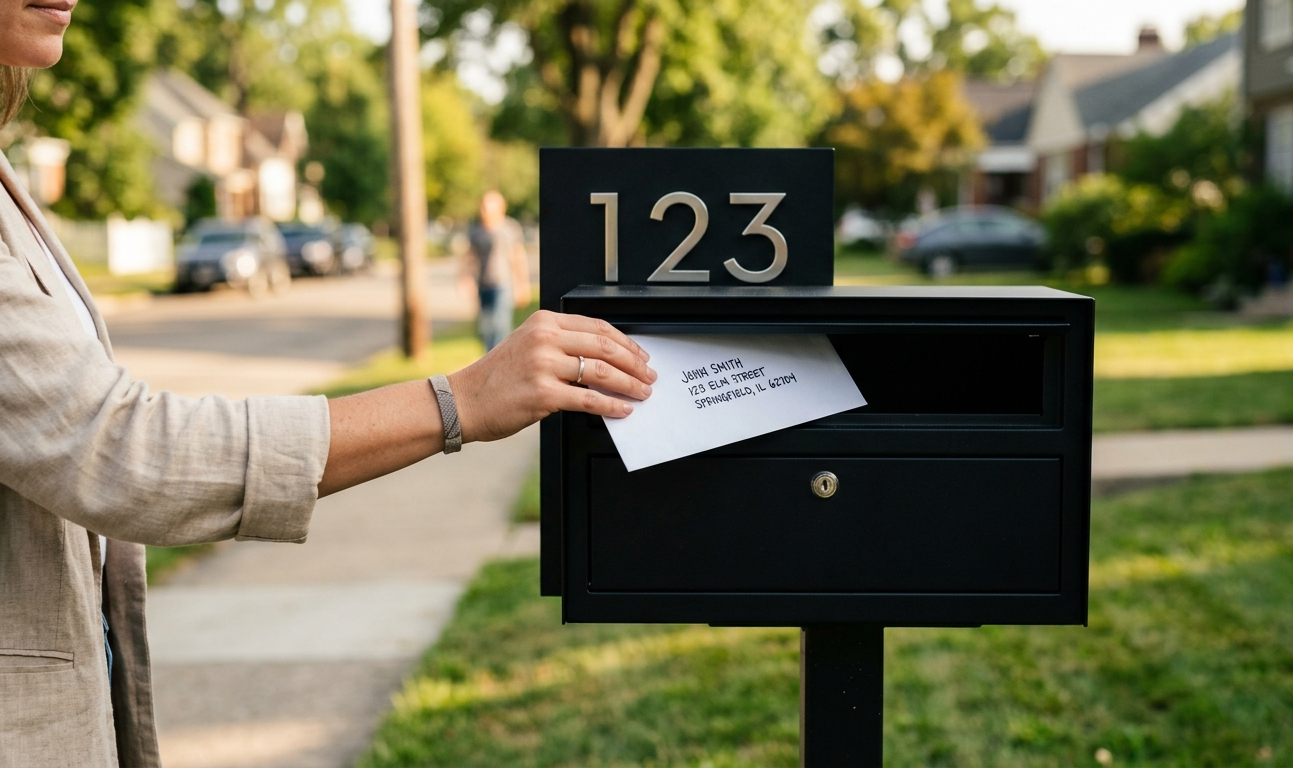
An address is a set of information used to identify the location of a person, building, business, or property. One of the most common types of addresses is a street address, which refers to the physical location of a building along a road or street.
A street address usually includes a house number, street name, and location details such as city, state, and ZIP or postal code. This structured format allows postal services, delivery companies, and navigation systems to find a specific location easily.
Addresses are used every day for tasks like:
Ordering online deliveries
Filling out official forms
Navigating to locations using maps
Registering businesses or services
Understanding how an address works helps ensure that mail, packages, and services reach the correct destination.
What Is a Street Address?
A street address is the part of an address that identifies the exact building, house, or property located along a specific street or road. It helps pinpoint the precise location of a residence, business, or property within a city or town.
It usually includes:
The building or house number
The street name
Optional unit or apartment number
Example:
456 Maple Avenue
When combined with the rest of the location details, the full address becomes:
456 Maple Avenue
Chicago, IL 60601
USA
This format helps postal services and delivery companies deliver mail and packages accurately.
Difference Between Address and Street Address
An address and a street address are closely related terms, but they represent different levels of location detail. A street address refers specifically to the part of an address that identifies the exact building or property located on a particular street. It typically includes the house or building number and the street name, and may also include a unit, suite, or apartment number for multi-unit buildings.
A complete address, however, includes additional geographic information needed to identify the full location. Along with the street address, it usually contains the city, state or province, ZIP or postal code, and sometimes the country. These details help postal services, delivery companies, and digital navigation systems accurately locate and deliver items to the correct destination.
What Is My Street Address?
Your street address is the part of your address that identifies the exact location of your home, building, or property on a specific street or road. It is the most precise part of an address because it tells others exactly where a building is located along that street. Street addresses are used by postal services, delivery companies, emergency responders, and navigation systems to find a particular location quickly and accurately.
For example, if your full address is:
742 Evergreen Terrace
Springfield, IL 62704
USA
Then your street address is:
742 Evergreen Terrace
The city, state, and ZIP code are typically entered in separate fields.
Components of a Street Address
A complete address is made up of several important components that work together to identify the exact location of a person, home, or business. Each part of the address provides specific information that helps postal services, delivery companies, and navigation systems locate the destination quickly and accurately. When these components are written in the correct order, they ensure that mail and packages reach the correct place without confusion.
Below are the main components of a typical address.
1. Recipient Name
The recipient's name is usually the first line of an address. It indicates the person or organization that will receive the mail or package. Including the correct name helps ensure that the item reaches the intended individual, especially in places where multiple people live or work at the same address.
Example:
John Smith
If the mail is being sent to a business or organization, the company name is often written instead of a person’s name.
Example:
ABC Marketing Solutions
Sometimes both the company and a specific person are included.
Example:
John Smith
ABC Marketing Solutions
2. Street Address
The street address identifies the exact building located along a specific road or street. It is one of the most important parts of an address because it pinpoints the precise location of a property.
A typical street address usually includes:
House or building number – the number assigned to the property
Street name – the name of the road
Street type – such as Street, Avenue, Road, Boulevard, or Lane
Example:
456 Maple Street
In this example:
456 is the building number
Maple is the street name
Street is the street type
3. Apartment or Unit Number
If the address belongs to a multi-unit building, such as an apartment complex, condominium, or office building, an additional identifier is used. This is usually written as an apartment, unit, or suite number.
This information is important because many people may share the same building address. The unit number ensures that mail reaches the correct apartment or office.
Example:
456 Maple Street Apt 12
Other common formats include:
Unit 5
Suite 300
Floor 4, Room 210
For example:
456 Maple Street Apt 12B
4. City
The city indicates the municipality where the address is located. Cities help postal services direct mail to the correct geographic area within a state or region.
Example:
Chicago
Large cities often have thousands or even millions of addresses, so the city name helps narrow down the delivery area.
5. State or Region
The state or region represents the larger administrative division where the city is located. In the United States, states are commonly written using two-letter abbreviations to save space and maintain standard formatting.
Examples include:
CA – California
NY – New York
TX – Texas
FL – Florida
IL – Illinois
Example in an address:
Chicago, IL
Using the correct state abbreviation helps postal systems process mail more efficiently.
6. ZIP or Postal Code
The ZIP code (Zone Improvement Plan code) is a numerical code used by postal services to sort and deliver mail efficiently. Each ZIP code corresponds to a specific geographic area or delivery route.
Example:
60601
In large cities, ZIP codes help identify smaller delivery zones, making mail sorting and distribution faster and more accurate.
Some ZIP codes may also include an extended format, such as:
60601-1234
This extended code further identifies a specific building or delivery segment.
Additional Optional Components
In some cases, addresses may include extra information such as:
Country – Required when sending international mail.
Building name – Often used for offices, universities, or large complexes.
Floor number – Helpful in large buildings.
Example:
Suite 305, Lincoln Tower
Street Address Examples
Here are several examples of how addresses are typically written.
Example 1: Basic Residential Address
John Smith
123 Main Street
San Diego, CA 92111
USA
This example represents a simple home address.
Example 2: Apartment Address
Sarah Johnson
456 Maple Avenue Apt 12B
Chicago, IL 60601
USA
This address includes an apartment number to identify the correct unit.
Example 3: Business Address
ABC Marketing Solutions
350 Fifth Avenue
New York, NY 10118
USA
This example shows a company receiving mail at a commercial building.
Example 4: Office Suite Address
Global Tech Inc.
200 Park Avenue Suite 1500
New York, NY 10166
USA
This example includes a suite number, which is common for office buildings.
Why Address Components Matter
Each component of an address plays an important role in ensuring accurate delivery. Postal systems rely on these details to sort mail, determine delivery routes, and prevent errors. Missing or incorrect information can lead to delayed or misdirected mail.
In today’s digital world, addresses are also used for online shopping, billing, identity verification, and navigation systems. Therefore, understanding the components of a street address helps people provide accurate location information whenever it is required.
Mailing Address vs Street Address
Many people often confuse the mailing address and street address, but they refer to slightly different things. Both are used to identify a location, yet they serve different purposes. A street address describes the physical location of a building, while a mailing address refers to the place where a person receives their mail. In some cases, these two addresses are the same, but in other situations, they may be different depending on personal preference or practical needs.
Street Address
A street address refers to the actual physical location of a home, building, or property on a specific street. It typically includes the house or building number and the street name, and sometimes an apartment, unit, or suite number if the building contains multiple units.
Street addresses are important because they help people and services locate a specific building quickly and accurately.
Street addresses are commonly used for:
Deliveries: Courier and delivery companies use street addresses to bring packages directly to a home or business location.
Navigation: GPS devices and map applications rely on street addresses to guide people to the correct destination.
Emergency services: Police, firefighters, and medical responders use street addresses to reach locations quickly during emergencies.
Example of a street address:
456 Maple Avenue
This address identifies the exact building located on Maple Avenue.
Mailing Address
A mailing address is the address where a person or organization receives letters, packages, and other forms of mail. In many cases, the mailing address is the same as the street address. However, sometimes people choose to use a different mailing address for convenience, privacy, or business purposes.
One common example is a Post Office Box (PO Box), which is a secure mailbox located at a post office. Instead of delivering mail to a physical building, the postal service places the mail in the assigned box.
Example of a mailing address:
PO Box 567
Dallas, TX 75201
People and businesses may use a mailing address that is different from their street address for several reasons:
Privacy: They may not want to share their home address publicly.
Security: Important documents can be stored safely at the post office.
Convenience: Businesses may collect mail at one central location.
Why Addresses Are Important
Addresses play a critical role in everyday life because they help identify locations and allow communication between individuals, businesses, and services. Without proper addresses, it would be difficult to deliver mail, navigate cities, or locate people in emergency situations.
Mail and Package Delivery
Postal services and delivery companies rely heavily on accurate addresses to deliver letters, parcels, and packages. Each part of an address helps the delivery system determine the correct route and destination.
If an address is incorrect or incomplete, it can lead to several problems such as:
Delayed deliveries
Returned mail
Lost or misplaced packages
Because of this, it is always important to ensure that the address is written correctly and completely.
Navigation and Maps
Modern navigation systems use addresses to help people find locations quickly and efficiently. By entering an address into a digital map or GPS device, users can receive directions to the exact destination.
Examples of systems that rely on addresses include:
GPS navigation devices
Mobile map applications
Delivery route planning software
These technologies convert addresses into geographic coordinates, making it easier for drivers and travelers to reach their destinations.
Emergency Services
Accurate addresses are extremely important for emergency responders such as police officers, firefighters, and ambulance teams. When someone calls for emergency assistance, responders use the provided address to locate the person in need.
Clear and correct addresses can:
Help responders find the location faster
Reduce response times during emergencies
Improve the chances of providing timely assistance
In critical situations, even small mistakes in an address can delay emergency help.
Business and Legal Use
Addresses are also essential for business operations and legal identification. Many organizations require a valid address when registering or providing services.
Businesses often need an address for purposes such as:
Business registration
Opening bank accounts
Tax documentation
Licenses and permits
Official correspondence
A reliable address also helps businesses build trust and credibility with customers, partners, and government agencies.
How to Write an Address Correctly
Writing an address in the correct format helps ensure that mail and deliveries arrive at the intended location without delays. Postal systems around the world follow standardized formats that make it easier for mail workers to read and process addresses.
Standard Address Format
A typical address is written in the following order:
Recipient Name
Street Address
City, State ZIP Code
Country
Example:
John Smith
456 Maple Street Apt 12
Chicago, IL 60601
USA
Using a consistent format makes addresses easier to understand for both humans and automated sorting systems.
Common Address Mistakes
Many delivery issues occur because addresses are written incorrectly or incompletely. Even small errors can confuse postal systems and delivery networks.
Some common mistakes include:
Missing apartment or unit numbers
Incorrect ZIP or postal codes
Misspelled street names
Wrong city or state information
To avoid these problems, it is always a good idea to double-check your address before submitting it on online forms, shipping labels, or official documents.
How Boxfo Supports Your Street Address Needs
A street address is essential for receiving mail and packages, but managing physical mail isn’t always convenient, especially if you travel frequently, run an online business, or want more privacy. This is where Boxfo’s virtual mailbox service becomes useful. Instead of replacing your street address, Boxfo provides a virtual mailbox service that lets you receive, view, and manage mail sent to your address digitally offering the convenience of traditional mail handling without needing to be physically present
You can also explore and choose locations that work best for you. Simply check the states we operate in to find the nearest available location for your needs. Some of the most popular locations include Pennsylvania, Florida, Texas, New Mexico, Nevada, and Massachusetts.